About Andrew
Hi! I’m Andrew
Wedding Celebrant, living in South Wales and celebrating weddings around the UK
The Symbolism of Handfasting: When Love Gets Literally Tied Up 💍🪢
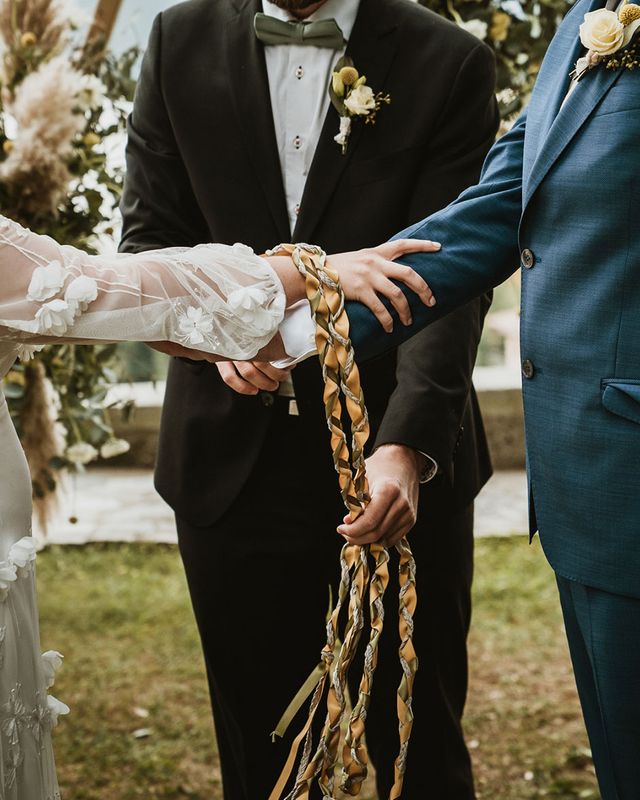
Handfasting is one of those wedding traditions that looks beautiful, ancient, and deeply meaningful… while also being, quite literally, about tying people together and hoping for the best.
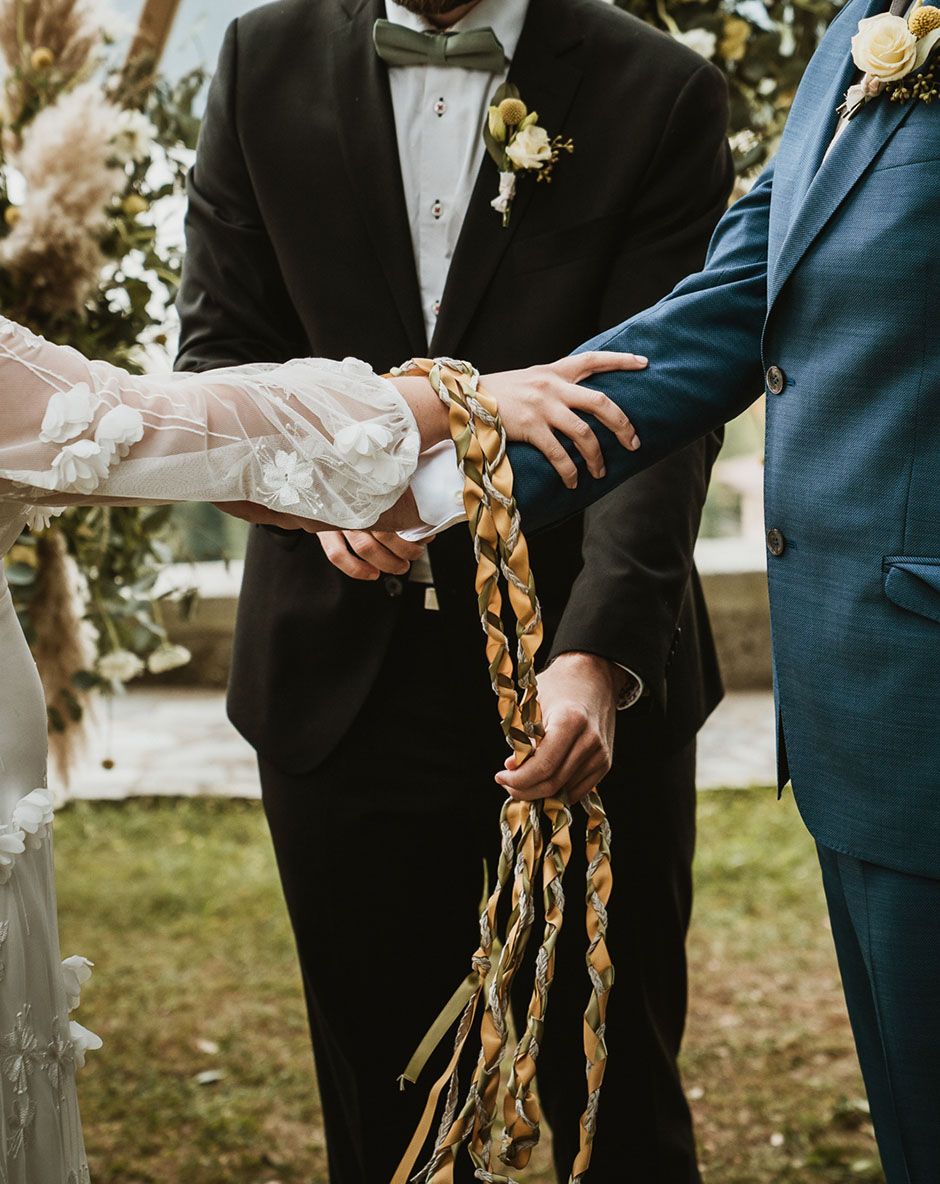
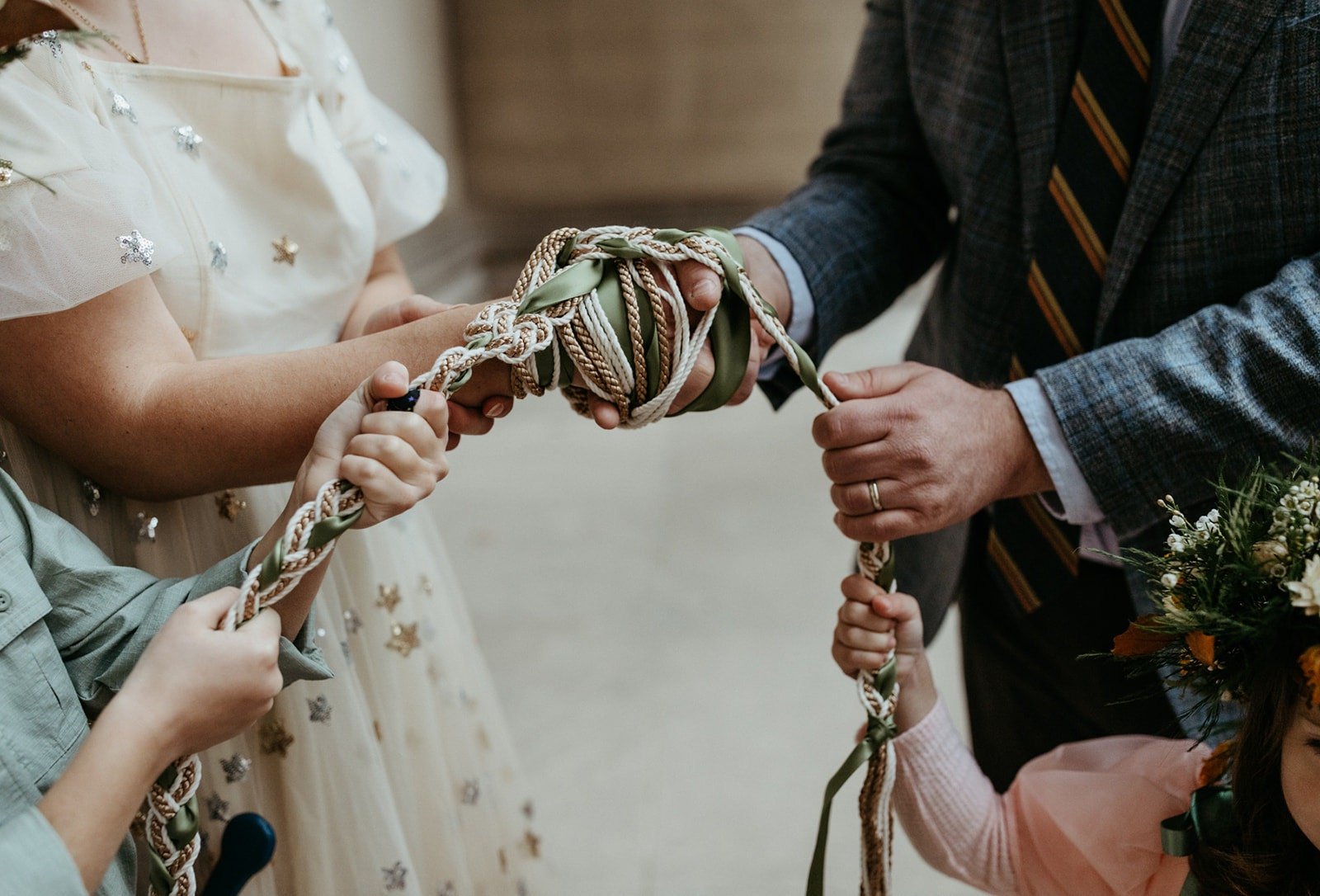
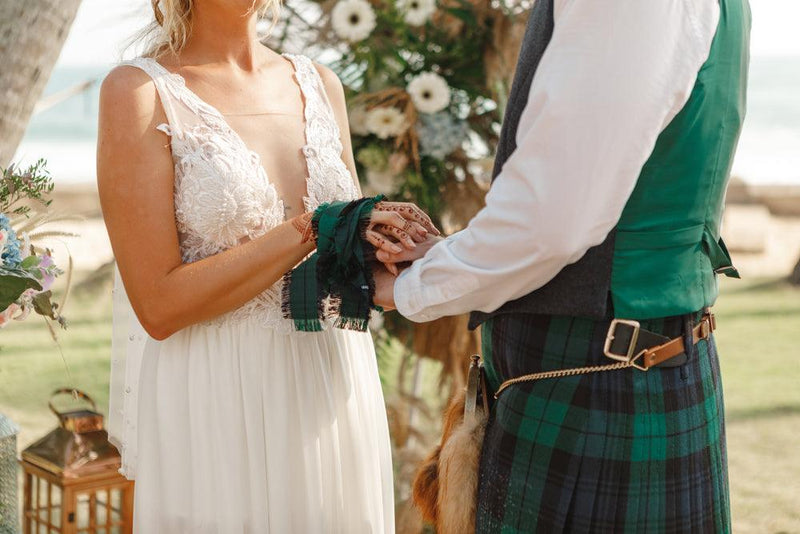
At its core, handfasting is a symbolic ritual where a couple’s hands are bound together with ribbons, cords, or fabric to represent their union. Romantic? Yes. Symbolic? Absolutely. Slightly impractical if someone needs the loo mid-ceremony? Also yes.
Let’s unpack the symbolism — with a sense of humour and both hands still free.
Where Handfasting Comes From (A Brief History Lesson, But Fun)
Handfasting has roots in ancient Celtic and Pagan traditions, where couples would bind hands as a sign of commitment. In some places, this was a trial marriage — essentially “let’s see how this goes and review in a year.”
So really, handfasting is the original soft launch relationship.
Today, it’s more symbolic and less “annual performance review,” but the meaning remains the same: two people choosing to bind their lives together. Voluntarily. With witnesses. And usually nice ribbon.
The Hands: Why This Bit Matters
Hands are important. They’re how we hold each other, support each other, and occasionally steal chips off each other’s plates.
By binding hands together, handfasting symbolises:
- Unity (you’re in this together now)
- Partnership (no one’s dragging anyone else along)
- Mutual support (even when one of you forgets the bins again)
It’s also a visual reminder that marriage isn’t just about love — it’s about showing up, holding on, and occasionally not letting go even when Netflix choices get heated.
The Cord: Not Just Decorative Rope
The cord (or ribbons, or fabric) represents the bond you’re creating. It’s not a restraint — it’s a reminder. A reminder that you are connected even when life gets messy, loud, or involves IKEA furniture.
Different colours can add extra meaning:
- Red for passion (and tolerance)
- Blue for trust
- Green for growth
- Gold for commitment
- White for purity (or at least good intentions)
Or you can just choose colours that match your theme. The ancestors will understand.
The Knot: The Bit Everyone Talks About
Yes, this is where “tying the knot” comes from. And yes, it is exactly as literal as it sounds.
The knot symbolises:
- A promise made
- A bond created
- Two lives becoming one slightly more complicated life
Once tied, the knot is usually loosened again — because symbolism is powerful, but no one needs to walk back down the aisle like a human pretzel.
Why Couples Love Handfasting Today
Modern couples choose handfasting because it’s:
- Personal
- Inclusive
- Non-religious (or adaptable)
- Meaningful without being stuffy
- Beautiful in photos (very important)
It also works brilliantly for couples who want something ancient, symbolic, and emotional — without needing a 20-minute explanation from a registrar.

The Real Symbolism (If We’re Being Honest)
Handfasting symbolises this:
“I choose you. On purpose. With witnesses. And nice ribbon.”
It’s a public, physical, slightly theatrical way of saying:
- We’re connected
- We’re committed
- We’re doing this together
- And yes, we know what we’re signing up for
Final Thoughts (And a Gentle Warning)
Handfasting is beautiful, meaningful, and rich in symbolism — but remember:
Once your hands are tied, you cannot:
- Adjust your outfit
- Fix your hair
- Grab tissues
- Stop your best friend crying loudly in the front row
Choose your timing wisely.
If you want a ritual that’s heartfelt, symbolic, inclusive, and just a little bit dramatic (in the best way), handfasting might be the perfect way to start your married life — tied together, laughing, and very much on the same team.